

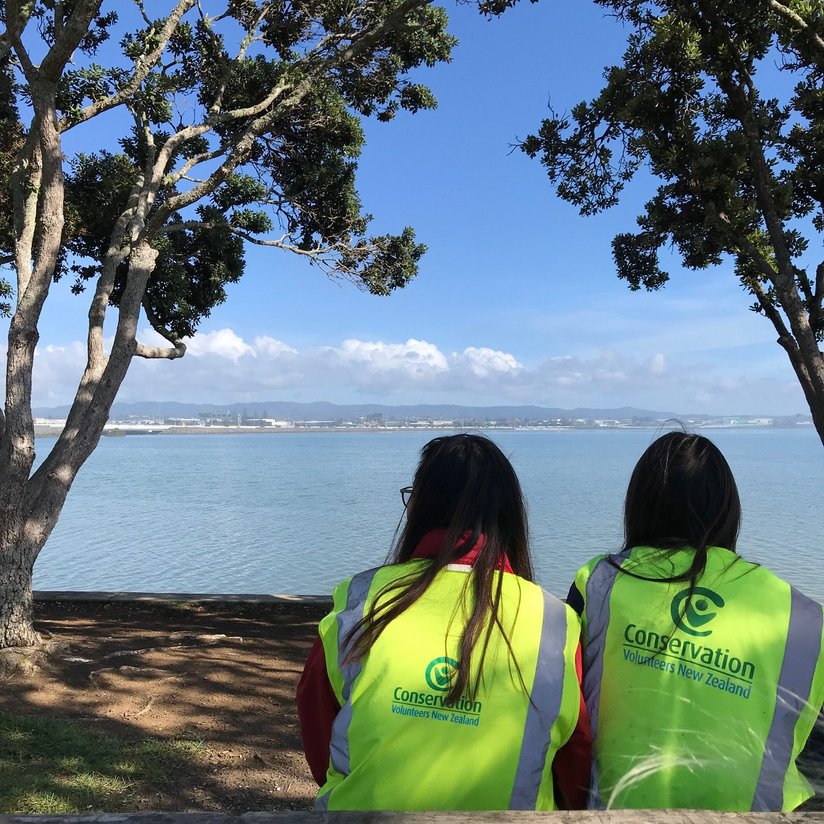
Eco-volunteering in New Zealand: saving nature
Actively participates in the preservation of New Zealand's nature
If you think of New Zealand , think of nature conservation projects in New Zealand ! Mountains, volcanoes, glaciers, coasts, forests… New Zealand has almost everything!
A nature conservation project in New Zealand: how does it work?
Minimum stay of 1 week, year-round! You arrive in New Zealand and report to the local volunteer office the following day. From that moment on, you'll be taken care of and participate in one or more New Zealand nature projects until the end of your program (the following Friday). The project leader will be your guide, training you on the project(s) and providing safety instructions.
The activities related to nature projects are diverse: planting trees, creating hiking trails, monitoring, seed harvesting, controlling invasive plants, installing fences, restoring heritage.
You'll practice English naturally every day and discover the ecological wonders of this country. To take action for our planet, it's now or never!
Nature, nature, nature
eco-volunteering, nature projects
Take action for our planet
by preserving nature
All-inclusive package
accommodation, food, local transportation
Your contribution to the costs
serves to cover part of the costs
- Nature construction sites
- Accommodation
- Useful information
- Dates 2026
- 2026 Price
- We care!
Nature construction sites


Who can participate in a nature conservation project in New Zealand?
Are you between 18 and 70? You are in good physical condition. No matter your level of EnglishYou are here to experience it in a… natural way! Please inform us before your departure of any disability, allergy, and/or injury that might affect your participation. The on-site staff will discuss this with you discreetly and with the utmost respect. No special skills or Working Holiday VisaWe will explain how to use any tool or equipment that might be used on the construction site.
Who will be the other volunteers?
You will be part of a team of up to 10 volunteers for your nature project in New Zealand. The other volunteers will be fellow avid travelers like yourself , young people of all nationalities, or locals who may have lived in the area for years.
The advantages of this formula are numerous:
• You will have a unique experience as part of a team led by a trained guide.
• This is a low-cost for travelers
. • A unique opportunity to learn about environmental issues in the country.
• A chance to contribute and gain valuable experience for your CV.
• Teamwork and living experience (with a maximum of 10 volunteers from around the world)
. • A chance to visit idyllic places that tourists never see, including remote locations.
• A certificate of appreciation at the end of your stay
. • And nothing but happiness!
Ecological experiment
All-inclusive package
Ongoing discovery
Useful carbon offsetting for your trip
Accommodation
Where will I be staying?
Accommodation options vary: hostels, campsites, caravans, etc. The type of lodging depends on the location of the New Zealand nature projects. Your local leader will always ensure that your accommodation is clean and comfortable, environmentally friendly, and aligned with the project(s). They will often show you places that even locals don't know about, according to feedback we've received from participants.
Useful information
Departure points
The starting points for your nature project in New Zealand are Auckland and Wellington (on the North Island), Christchurch and Punakaiki (on the South Island). We recommend changing regions every month if you are planning a longer stay, allowing you to discover the country and its diverse landscapes. You choose the region(s), and our partner determines the projects based on the season, needs, etc. You can also change destinations every week.
What should I bring to participate in a nature conservation project in New Zealand?
Backpack, rain jacket, walking shoes/boots with reinforced toes (essential!), trousers, long-sleeved shirts, water bottle, work gloves, sunglasses and sunscreen (in summer), sleeping bag, mosquito repellent, possibly a sleeping mat. Max. 15 kg of luggage (leave excess in a locker at a hostel or train station).
Advice for travellers going to New Zealand
Consult the information on New Zealand on the website diplomatie.belgium.be
What visa is required to participate in a nature conservation project in New Zealand?
You can participate in a New Zealand conservation project with a standard tourist visa, generally valid for 3 months (plus a valid passport ), or with your New Zealand Working Holiday Visa for a longer stay. We recommend combining conservation projects in New Zealand with our job assistance program in New Zealand. Since October 2019, you must apply for an NZeTA if you are traveling to New Zealand as a tourist.
Dates 2026
2026 Price
New Zealand Eco-Volunteering/Nature Project Awards
Price per week: € 600
This is a contribution towards the costs of the partner New Zealand non-profit association, namely the support which includes: full board meals 7 days a week, accommodation, transport costs related to the projects, equipment and materials needed for the various work sites and the organization of a minimum of 5 days of projects per week.
Not included:
- Return flights and airport taxes to Auckland/Christchurch. Expect to pay around €1800 + transport to the meeting point.
- The New Zealand Working Holiday Visa if you plan to stay and work in NZ while being paid (the tourist visa is free): approximately €370.
- Medical insurance is recommended. We will gladly provide you with the information.
- Optional cancellation insurance of 4%
We care!
Nature conservation is a priority for future generations! Preserving nature is no longer a choice but an urgent necessity.
At Languages & Travel, we believe it is possible to combine language practice with nature conservation and the socialization we so sorely missed during the health crisis.
By participating in environmental projects or eco -volunteering , you will make a contribution, raise awareness of the importance of replanting where needed, and learn to recognize invasive plants and harmful species often introduced long ago by humans. Along the way, you will practice English in a natural setting with locals and participants from all over the world.
Languages & Travel has been offering this type of program for over 20 years. In our own way, we also want to contribute to nature conservation by inviting you to get involved in these kinds of projects. Planting a tree in New Zealand is a good thing for our planet.
Languages & Travel, we care!
Discover our eco-volunteer programs in Costa Rica and our marine conservation program in the Great Barrier Reef in Australia .
PHOTO AND VIDEO GALLERY


Life as a volunteer in NZ is tough


Yessss, I made it!


I clean the beach and make myself useful; I'm from the generation that wants to change things

That's how I met him!

What else?

Our dream team

Have you seen the thistle?

The best volunteering team ever

Greener than green

Photo break

We've seen worse places to work!

Smile!

Tree planting

I volunteer!

I plant, therefore I am!
Life as a volunteer in NZ is tough
Yessss, I made it!
SIMILAR PROGRAMS
![New Zealand Working Holiday Visa: working holiday with complete freedom]()
New Zealand - Various regions
New Zealand Working Holiday Visa
![Auckland: cycle highway]()
New Zealand - Auckland
Dynamic English courses
![great barrier reef, corals, australia]()
Australia - Cairns
Conservation of the Great Barrier Reef
![Feeding the koalas]()
Australia - Cairns
Eco-volunteering in Australia
![]()
Latin America - Cordoba
Volunteering in Argentina: choose your cause!
![Eco-volunteering: nature projects in Costa Rica]()
Latin America - Osa
Save the sea turtles in Costa Rica!


Formulas
Language staysWorking Holiday Visa (WHV)Student job abroadAu pairImmersion language coursesTeen holidays with activitiesHolidays for the whole familyStays 50+Eco-volunteeringCompany internshipsSchool tripsStay informed
©2025 Languages & Travel Belgium
Created by Artimon Digital
Change cookie settings
Terms and Conditions
Legal notice
Privacy Policy
Carbon offsetting